Degree Offerings
- B.S. Communication Sciences and Disorders
- M.S. Speech-Language Pathology
- Undergraduate minor: Pre-Audiology
- Graduate specializations: Deafness Specialty Program, Interdisciplinary Specialty Program in Autism, Medical Specialization Program
Faculty and Staff
Contact us and learn more about our faculty.
York Wellness and Rehabilitation Institute
The CSD Department's clinics are an integral component of undergraduate and graduate pre-professional education. The clinics develop students' clinical skills while delivering quality services to children and adults under the direct supervision of licensed, certified speech-language pathologists and audiologists. In addition to off-campus outreach programs, Nazareth offers these on-campus clinics related to CSD:
Teacher Certification
Find teacher certification information on the Nazareth School of Education website.
Career Options
Our undergraduate and graduate programs prepare you to get credentialed for a variety of careers.
Study Abroad
Among the many overseas programs that Nazareth offers is a deaf education and empowerment program in Ethiopia, working with deaf children.
Communication Sciences and Disorders Association
Nazareth's CSDA club is a great opportunity for students of any major to learn about and experience the fields of speech-language pathology and audiology.
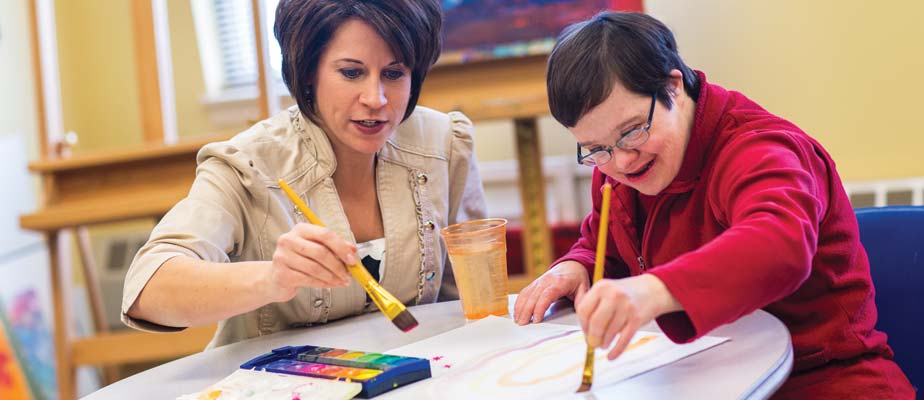
Marissa Favro-Geitner '92, '95G
“We like to hire Nazareth graduates. By learning to collaborate with colleagues in other disciplines and put the client at the center, Nazareth’s students are at the leading edge of the evolution in human services to be more integrated and person-driven. The ultimate benefit is to people with disabilities or injuries, who get better faster.”
— Marisa Favro-Geitner (on left in photo), speech-language pathologist and president and CEO of Heritage Christian Services in Rochester
Work with us
We are seeking clinical educators. Please let us know if you are interested in more information about:
- Community Sciences and Disorders-Adjunct Faculty Pool (Speech & Language Clinic)
- Community Sciences and Disorders-Adjunct Faculty Pool (Adult Clinic)
Also: Adjunct faculty employment information.